House clearance in St Albans for homes, flats and estates

House clearance in St Albans should feel organised, respectful and straightforward from the first conversation to the final load leaving the property. We provide a practical clearance service for households that need a full or partial removal of unwanted items, with a focus on keeping the work controlled and the property left ready for its next stage. Whether the task involves a family home, a rented flat, a loft full of stored belongings or a garage that has become difficult to use, the aim is to clear efficiently while handling items in a careful, considered way.
Our service is set up to deal with common clearance needs across the domestic property types people actually use every day. That can include furniture, white goods, bric-a-brac, bagged household waste, box contents and mixed items from rooms that have accumulated over time. We can also support smaller, more selective clearances when only certain spaces need attention. If you are comparing options and want a simple way to request a quotation, this page sets out the main service areas and the kinds of jobs that typically fit them.
When a property needs clearing, the useful detail is often in the scope rather than the headline. A full clearance may involve every accessible room, while a partial clearance might focus on just one floor, one store room or specific bulky items that are no longer wanted. We work with that distinction in mind, so the service can be matched to the amount of material, the layout of the building and any access limits that affect the job. Clear instructions and a sensible plan make the process more efficient for everyone.
Clearance for whole homes and partial contents

A house clearance usually covers far more than carrying items out of the front door. It can involve sorting, separating reusable items from general waste, managing different room types and dealing with bulky possessions that take up unnecessary space. We approach it as a structured service for occupied or vacant homes, helping clients deal with everything from one room of surplus contents to a full property clearance. The key is to remove what is no longer needed without creating disruption around the remaining items or fixtures.
Partial clearance can be the right choice when a property is still in use and only certain areas need attention. For example, one upstairs room may hold old furniture, an under-stairs cupboard may be overflowing, or a dining room may need bulky items removed before decorating. In these cases, it helps to know exactly which rooms are included and which items stay in place. That clarity keeps the work targeted and avoids unnecessary handling of possessions that are not part of the job.
If you are planning a clearance, it is useful to think in practical terms before you make an enquiry:
- Which rooms or storage spaces are included
- Whether large furniture must be dismantled
- Whether the property is occupied, vacant or partly furnished
- Any access constraints such as narrow stairs or limited parking
- Any items that must remain on site
Furniture removal, disposal and mixed household items

Much of a household clearance comes down to the safe removal of furniture and general contents that are awkward to shift by ordinary means. We handle common domestic items such as sofas, tables, wardrobes, beds, drawers, chairs and other loose household pieces. Mixed clearances can also include small appliances, packed boxes, ornaments, broken belongings and everyday waste gathered in cupboards, sheds or storage areas. The work needs to be coordinated so that the right items are taken away and the property remains orderly during the process.
Furniture disposal and furniture clearance are closely related, but the practical need can be different from one property to another. Sometimes the customer wants only one heavy item removed, while at other times a whole collection of furniture needs clearing from several rooms at once. Our service can be adapted to either situation. Where items are suitable for reuse or where the layout of the job makes it sensible, careful sorting may be part of the process; where items are no longer usable, the focus is on straightforward removal and lawful disposal.
For many households, the most helpful service is one that deals with the visible clutter first and then works methodically through the remaining bulk. That may mean removing oversized pieces before handling the smaller contents around them, or clearing a room in stages so access stays safe and practical. If you are comparing suppliers, look for a service that matches the size and type of furniture rather than assuming every clearance is the same.
Lofts, garages and other storage areas
Lofts and garages often become the places where items are stored for “laterâ€, which is why they can hold a surprising amount of material by the time a clearance is needed. These spaces may contain seasonal goods, boxes, broken household items, old furniture, archived paperwork, tools or items left over after a move. Clearing them calls for different handling from a standard room, because access can be tighter and the contents are often varied, dusty or awkwardly stacked.
We also support clearances for garages that have been partly taken over by old appliances, boxes, garden equipment or mixed waste. In a loft, the challenge may be low beams, ladders, insulation or limited headroom; in a garage, it may be the volume of items and the mix of hard and soft materials. The task is not just to empty a space, but to do it in a way that respects the physical layout and avoids unnecessary strain on the property itself. Planning the route in and out matters, especially where access is tight.
It is often useful to decide in advance whether the clearance is intended to create storage space again, prepare for renovation or simply remove accumulated clutter. Different goals can affect the order in which items are handled, especially if some belongings are to remain in place. A good clearance plan keeps the work focused on the right area and avoids moving things more than once.
Garden clearance and outdoor household waste

Outdoor areas can gather just as much unwanted material as rooms indoors, especially when sheds, patios and side passages are used as temporary storage. Garden clearance may include broken plant pots, cuttings, old outdoor furniture, damaged fencing components, bags of general waste, children’s outdoor items or materials left after a tidy-up. The service is especially useful when the aim is to reclaim usable space rather than simply remove one or two objects.
Garden clearance is often about separating what belongs in the green waste stream from what must be treated as general mixed rubbish. In practical terms, that can mean handling branches and cuttings alongside heavier items such as timber, metal shelving, torn sacks or disused tools. Because outdoor clearances vary so much, it helps to be specific about whether the work is limited to the garden itself or includes sheds, paths, side returns and other external storage points. Small details change the job, particularly where access and load size are concerned.
For homes with both indoor and outdoor clutter, a combined clearance can be a sensible option when it reduces duplication and keeps the schedule simpler. Even so, the best approach is usually to identify the sections that matter most and tackle them in a logical order. That way the finished result feels tidy and complete rather than rushed.
Garage clearance for bulkier items and mixed contents
What a garage clearance can involve
Garages are often used for more than vehicles, so a garage clearance may need to cover stored furniture, boxes, tools, sports equipment, household overflow and damaged items that are no longer being used. The amount of material can be modest or extensive, but the common feature is that the space has become difficult to organise around. Our service helps clear the contents so the garage can be repurposed, tidied or prepared for new storage systems.
Because garages regularly contain heavier or mixed-density items, the work benefits from careful sorting before lifting begins. Hard materials, broken plastic items, old household goods and awkwardly shaped possessions may all be present together. Handling them in a sensible sequence reduces congestion in the space and helps keep the process controlled. If some items are to be retained, it is best to separate them clearly before the clearance starts, so nothing important is removed by mistake.
A garage clearance can be a practical first step before a larger home project, especially where the garage has become a catch-all for everything that does not have a place elsewhere. Once the contents are reduced, it is much easier to see the usable floor area, assess what remains and decide how the space should function going forward.
About St Albans
St Albans is a historic city in Hertfordshire with roots that reach back to the Roman settlement of Verulamium, one of the most important towns in Roman Britain. The modern city keeps visible links to that past through its museum, the remains of Roman walls and the nearby Verulamium Park, which sits on land long associated with the ancient settlement. The city centre combines older streets, market activity and later commercial development, while the dominant skyline feature is St Albans Cathedral, whose long history spans the medieval period and later rebuilding. The cathedral stands on one of the highest points in the city and remains a defining landmark. St Albans also has a strong sense of layered architecture, with timber-framed buildings, Georgian terraces and Victorian streets appearing alongside newer housing and civic buildings. The street pattern reflects centuries of growth from a Roman and medieval core into a modern commuter city. The Alban Arena, public gardens and the river Ver flowing through the wider area add further variety to the city’s built and natural character. Nearby green spaces and the wider Hertfordshire countryside contribute to the contrast between an active urban centre and a more spacious surrounding landscape. Cultural life includes markets, local theatres, independent shops and regular events that make the city centre busy and varied. These features together give St Albans a character that is both historic and current, with landmarks and everyday urban life sitting side by side in a compact but distinctive setting.
Office clearance and business waste removal
Commercial properties need a different kind of clearance because the contents often include desks, chairs, filing units, storage systems, packaging, archived materials and general business waste. Office clearance is useful when a workspace is being reconfigured, vacated or reduced in size, and it can help remove items that have built up over time without serving a current purpose. The work may involve individual rooms, entire floors or only selected furniture and fixtures, depending on the building and the business need.
Business waste removal is usually at its most useful when it supports a tidy handover or a planned internal change. Some items are bulky, some are repetitive and some are simply awkward to store until a decision is made about them. We can assist with the practical side of clearing those contents, while keeping the focus on what the business actually wants to retain. If you are arranging a move or a refurbishment, it is sensible to separate ongoing office use from items that are no longer required before the clearance begins.
Commercial clearances often work best when the scope is written down in ordinary terms: which rooms are included, which items remain, and whether there are any deadlines connected to the property. That level of clarity makes it easier to plan the sequence of removal and reduces confusion once the work starts.
Builders waste clearance and post-project tidying
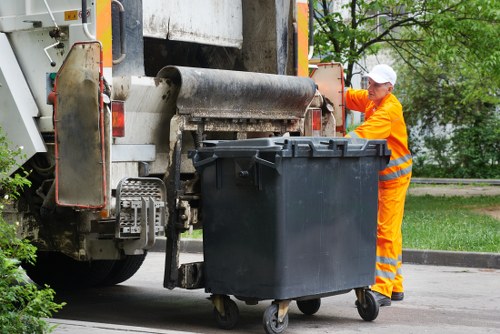
Builders waste clearance is distinct from household clearance because it usually deals with the leftovers of a project rather than domestic clutter. That may include offcuts, packaging, broken fixtures, old fittings, plasterboard, timber, bagged rubble or mixed materials left after renovation work. The service is useful when the visible result of a project has been achieved, but the site still needs the remaining waste taken away so the space can be used properly.
There is an important difference between a room that simply has items to be cleared and a room that contains a mix of disposal material from building work. The contents may be heavier, dustier or more fragmented, and the property layout may be more fragile because decorating, repair or fitting work has just been completed. In that setting, the clearance needs to be careful and orderly rather than hurried. Good sequencing protects the finished work and keeps the site more manageable.
For customers planning a project, it can help to think about the clearance as the final practical stage rather than an afterthought. Once the waste is removed, it becomes easier to inspect the room, finish details and hand the property over in a cleaner state. If you need to discuss a project clearance or arrange a quotation, the best next step is to get in touch with the details of the items involved.
Planning a clearance and arranging a quotation
Most clearance jobs become easier to quote when the scope is described in simple, factual terms. A short note about the property type, the rooms involved, the type of contents and any access issues is usually enough to start. If there are large pieces of furniture, multiple floors or items in lofts, garages or sheds, mentioning them early helps the service match the right level of work to the job. This is also the point to say whether the property is occupied, empty or partly furnished.
Photographs can be useful when a job includes mixed contents or unusually bulky pieces, but they are best used to support a written description rather than replace it. The aim is to give enough practical detail for the work to be understood clearly: where the items are, how many rooms are affected, what should stay and what should go. When you are ready, request a quotation with a straightforward overview of the clearance and any access limitations that may affect the work.
If you are comparing options, focus on whether the service fits the actual task rather than the biggest promise. A good clearance quote should make sense for the contents involved, the layout of the property and the type of removal required. For domestic and commercial customers alike, the value lies in a clear scope, sensible handling and a finish that leaves the space ready for what comes next. To start the process, contact us with the details of your clearance.
Recycling, disposal and useful disposal decisions
Not every item in a clearance should be treated in the same way. Furniture, general household waste, white goods, cardboard, metal items and mixed materials may each follow a different disposal route, depending on what has been collected. That is one reason a structured service is more useful than simply moving everything into a single pile. The better the sorting at the outset, the easier it is to handle the contents responsibly and efficiently.
Recycling and disposal decisions matter most when a job combines reusable household items with broken or worn-out material. A careful clearance can separate the obvious categories without turning the process into a lengthy sorting exercise. For customers, the practical benefit is that the work is completed in a way that reflects the kind of items being removed, rather than treating every clearance as identical. That approach suits homes, garages and offices alike.
Useful preparation usually means keeping the items that will stay, pointing out anything fragile or important and making sure access routes are as clear as they need to be. Beyond that, the rest of the work is about the removal itself. If you need a quotation for a home, office or project-related clearance, the main thing is to describe what is involved and let the scope be assessed properly.